Commercial extracts assessed
The chemical structures and compositions of fucoidans are known to be key determinants of their bioactivities. In a new study, four commercial fucoidan extracts were independently characterised to determine their chemical composition and structural features, before then being assessed for their antioxidant, antiviral, antifungal and prebiotic activities.
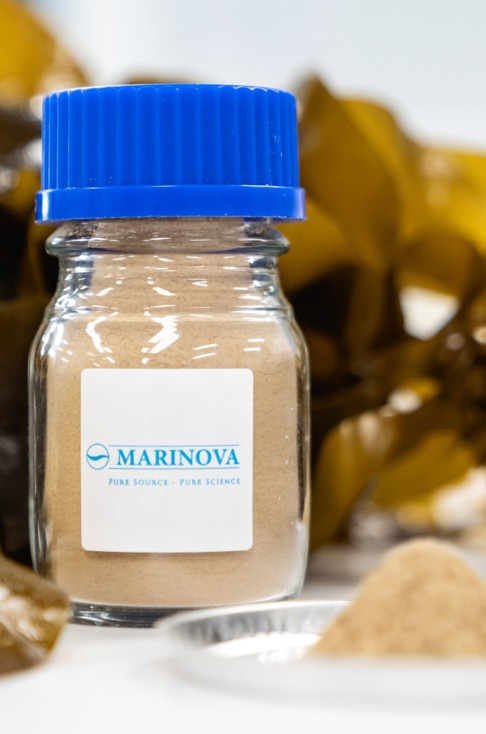
A high purity Undaria pinnatifida fucoidan extract produced by Marinova was included in the study. It repeatedly outperformed the three alternative fucoidan extracts.
Among the findings, Marinova’s Undaria pinnatifida fucoidan sample:
- Contained the highest amount of fucose. Researchers suggested ‘it is the purest sample.’
- Demonstrated the highest degree of sulfation. Researchers noted that the high sulfate content enhanced all bioactivities tested.
- Exhibited a significantly higher degree of antioxidant activity than the other extracts.
- Showed a clear reduction in Nipah virus within cells, suggesting it is a ‘potent antiviral’. Fucoidan prevented viral infection through inhibition of the attachment and entry replication phases across a broad spectrum of viruses, including Nipah virus.
- Demonstrated sustained prebiotic effects. Researchers identified it as ‘the more potent prebiotic among the commercial samples.’
“Marinova welcomes independent assessments of its fucoidan extracts,” said the company’s Technical Services Manager, Mr David Gesch. “These results are testament to Marinova’s commitment to providing the highest quality and most effective fucoidans on the market. This assessment will undoubtedly be of interest to brand owners and formulators sourcing efficacious ingredients supported by scientific evidence.” Mr Gesch finished, "While we have long been confident in the quality of our products, independent validation of this calibre provides welcome confirmation of Marinova's commitment to excellence."
The full paper, ‘Structure-Function Correlations of Commercial Fucoidan Extracts: Antioxidant, Antiviral, Antifungal, Antibacterial and Prebiotic Activities’ was published in the journal Molecules.