Inhibiting Helicobacter pylori
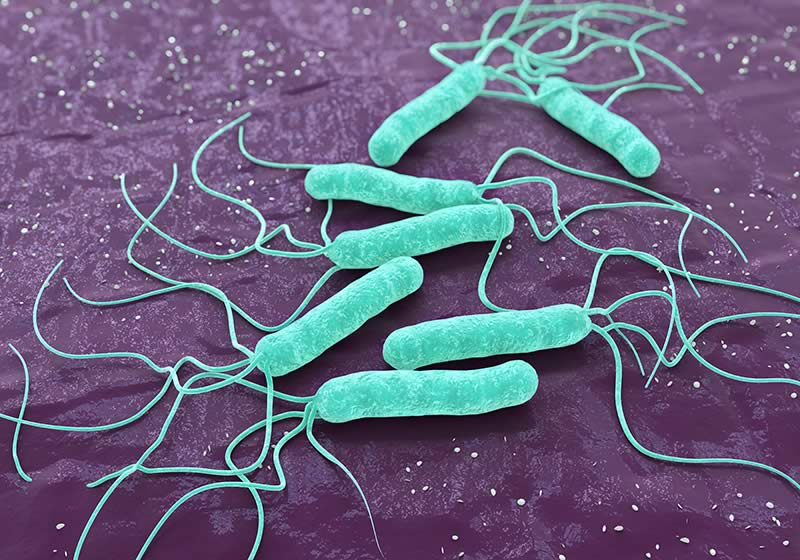
The bacterium Helicobacter pylori resides in the gastric mucosa of approximately half the world's population. Whilst many people will remain unaware of its presence, around one fifth of infected individuals will develop conditions such as severe gastritis and peptic ulcers. Research has also linked H. pylori to gastric cancers.
Whilst most bacterial infections can be treated with a single antibiotic, treatment of H. pylori infection is complex. It commonly involves two or three different antibiotics delivered with a proton pump inhibitor. Increasing resistance to antibiotics is also becoming a concern.
A number of studies have suggested fucoidans may prevent H. pylori adhering to host cells. Fucoidan extracts produced by Marinova from both Undaria pinnatifida and Fucus vesiculosus have been shown to be highly effective inhibitors of H. pylori adhesion to human gastric epithelia in vitro (Chua, 2015). This result is consistent with clinical work that confirmed increased rates of healing for stomach ulcers following the ingestion of other fucoidan extracts (Juffrie, 2015).
New Taiwanese in vivo and in vitro research has reported that a fucoidan extract significantly reduced infection of H. pylori without developing drug resistance. The study showed that the fucoidan extract prohibited H. pylori adhesion to host cells, thereby reducing the infection rate by 60%. The researchers concluded that fucoidan extracts have potential to protect the stomach from the H. pylori infection by reducing both the total pathogen count and induced gastric inflammation.
The paper, 'Fucoidan from Sargassum hemiphyllum inhibits infection and inflammation of Helicobacter pylori' was published in the journal Scientific Reports.